
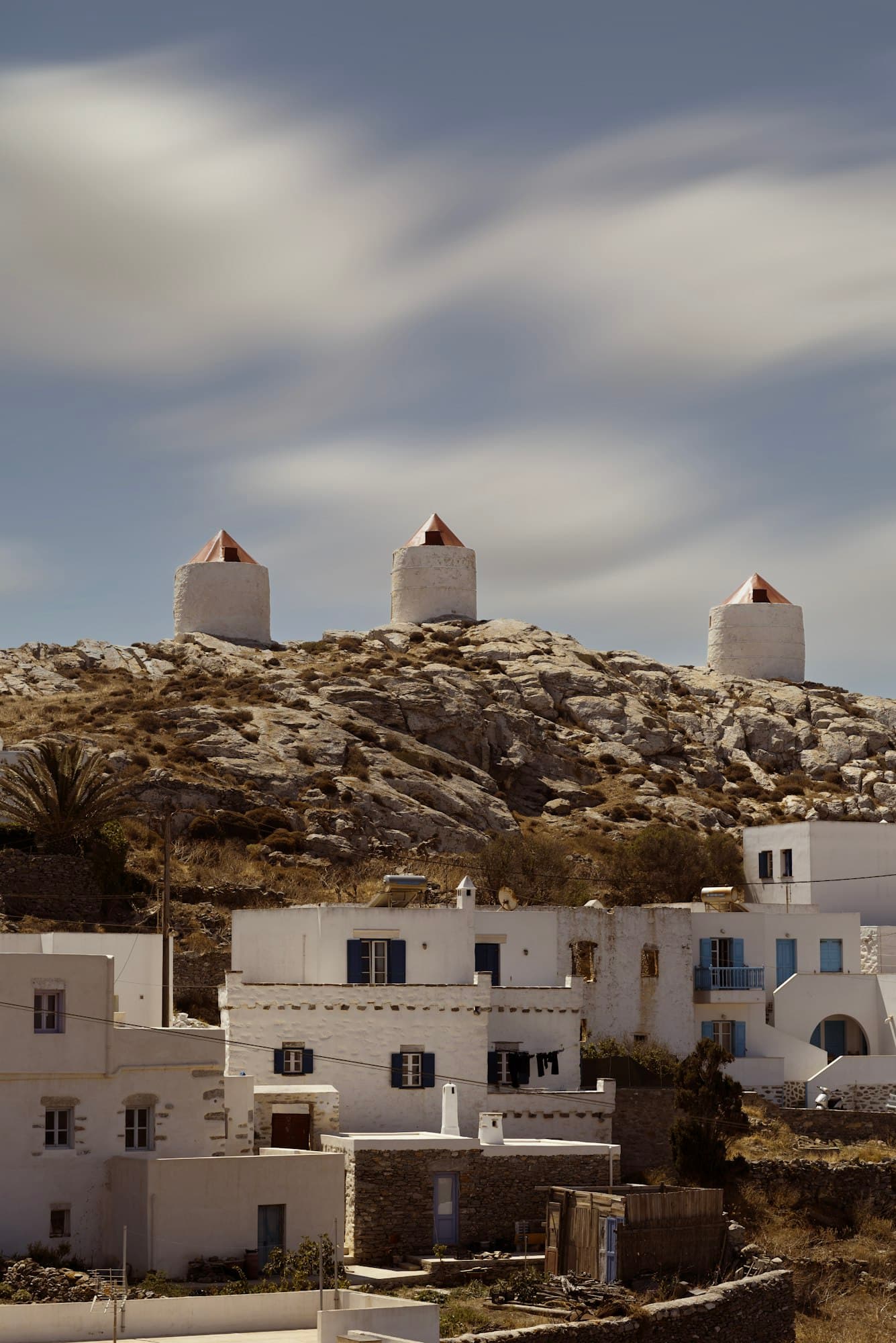
The windmills of Amorgos Chora stand in a line along the ridge above the village, and most of them have been still for decades. This one works again: Nikolas, a carpenter, rebuilt its roof, its wooden gears and the shaft that carries the sails over three winters, and added a small whitewashed house beside it for the kitchen and shower room. On calm summer evenings he rigs the sails. The round room inside the mill is the bedroom, with a double bed, curved walls, deep-set wooden shutters and light from every side; it sleeps two. Chora’s lanes and squares are a ten-minute walk down a stone path, the cliff monastery of Hozoviotissa is a short drive away, and Katapola port and its beaches are fifteen minutes by car.
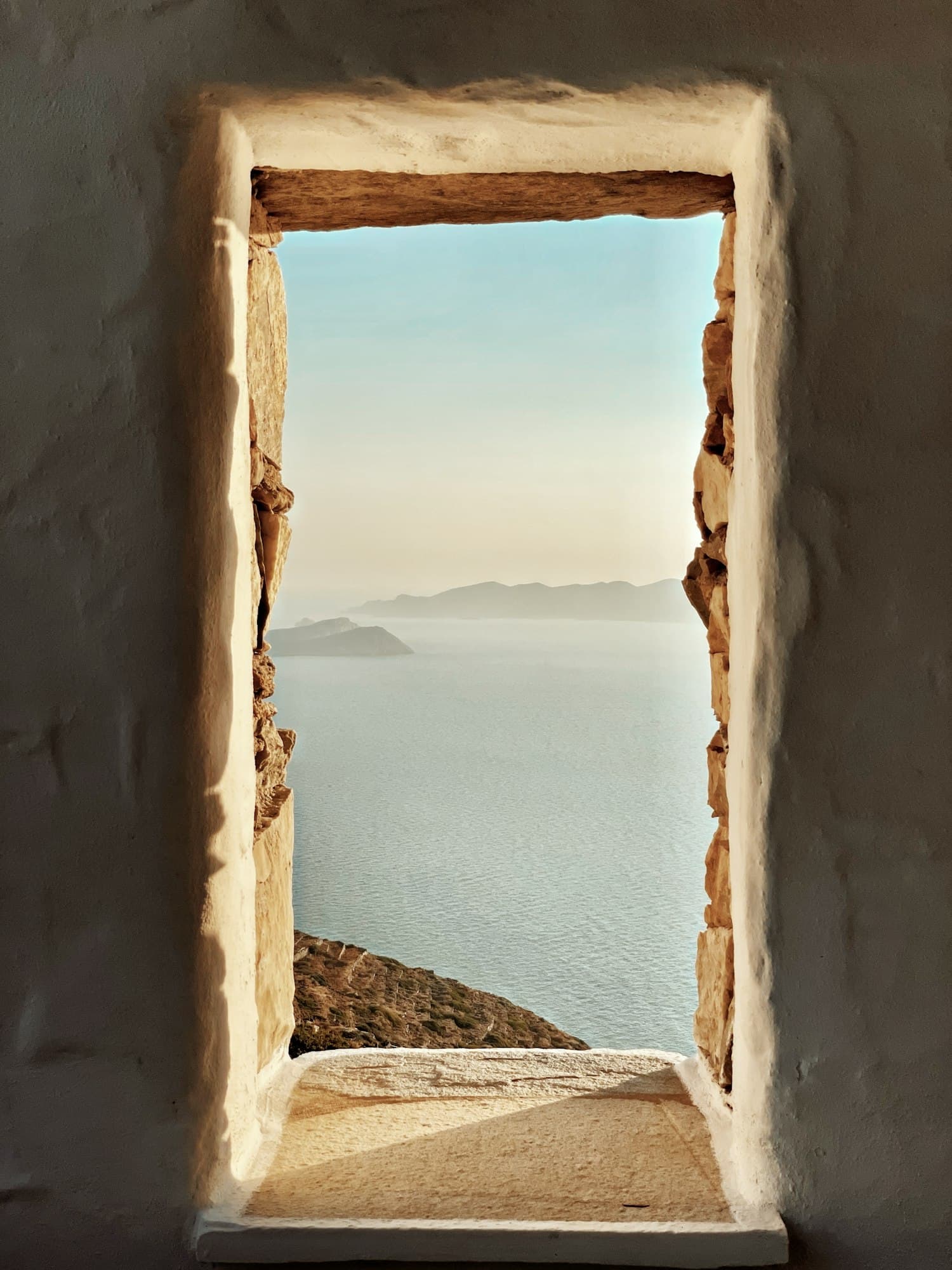
Kastro is the old capital of Sifnos, a ring of houses whose outer walls once formed the village’s defences. This one-bedroom house is part of that ring: a lane-side door, a narrow kitchen and a bedroom with a double bed and a small window cut through the outer wall, looking straight out to sea. It sleeps two. From the end of the lane, steps lead down to the chapel of the Seven Martyrs on its rock, where people swim in the early evening. Cars stay at the village edge, a three-minute walk away, so bring a soft bag rather than a big suitcase. Apollonia, with the shops and the island’s busiest evenings, is ten minutes by bus, and Kamares port twenty-five by car.
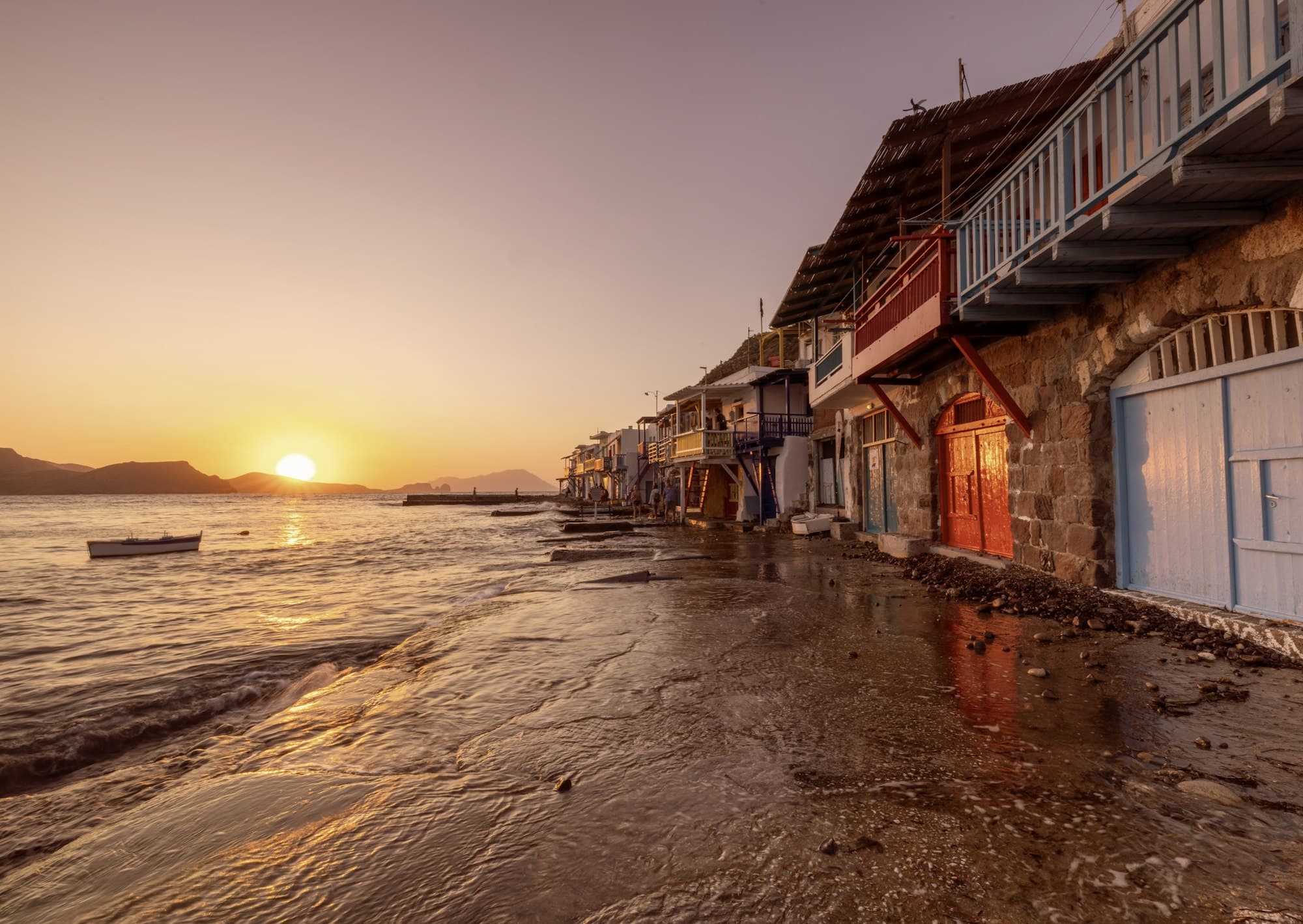
In Klima, on the great bay of Milos, the fishermen’s houses sit right on the waterline: boats were winched into the ground floor, the syrma, and the family lived above. In this one the boat garage is now a bedroom with a double bed and doors that open straight onto the sea, and the painted wooden balcony upstairs is where you eat breakfast with your feet almost over the water. It sleeps two. It is a small, simple house: one bedroom, a compact kitchen and a shower room. In a south wind the waves can reach the step, and that is part of it. Plaka and its sunset are a fifteen-minute walk up the hill, Adamas port is ten minutes by car and the beaches of the north coast twenty.
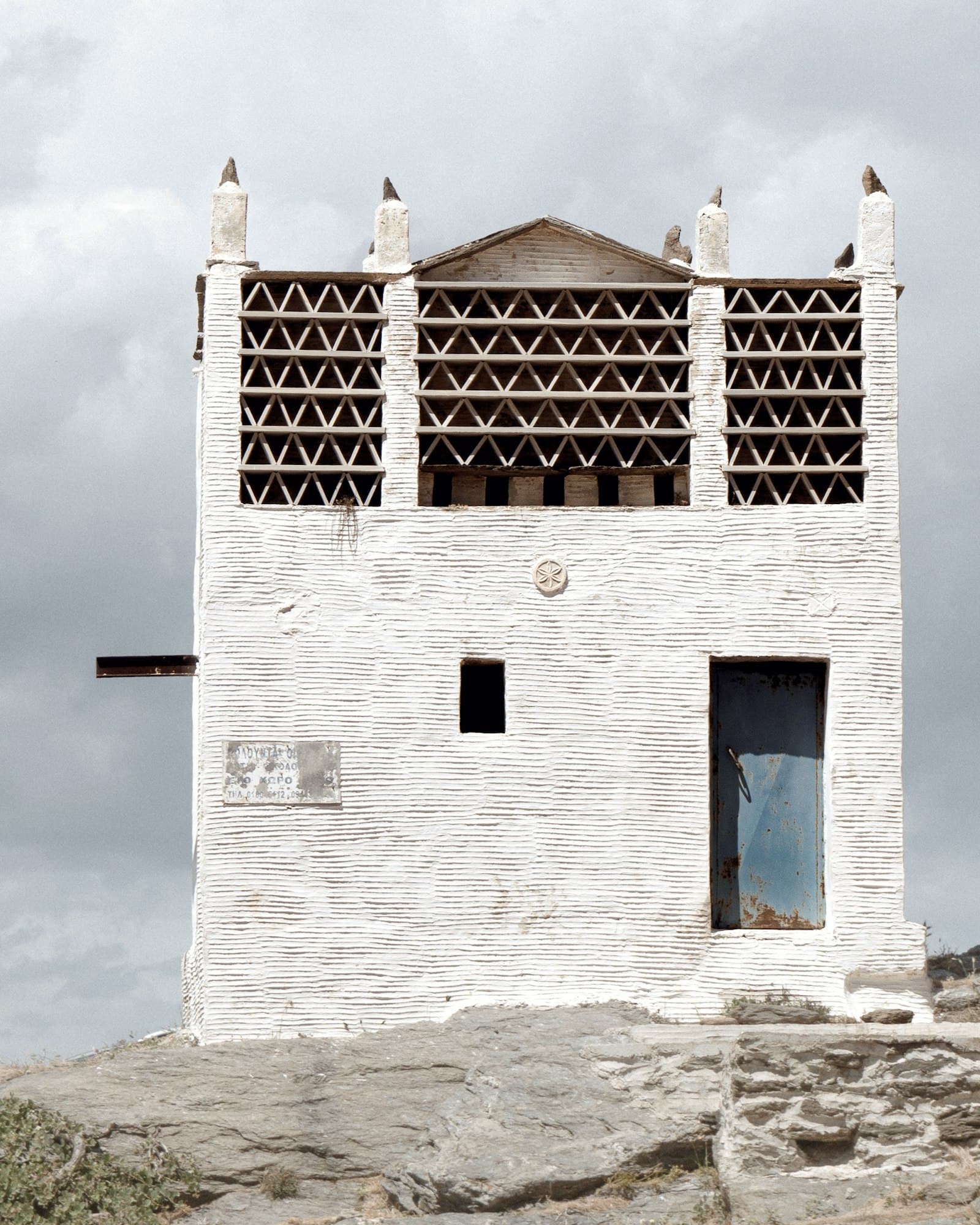
Tinos is known for its dovecotes, tall stone towers built by farmers and decorated with geometric lattices of slate. The valley below Tarampados has some of the finest, and this is one of them, carefully restored: the lower floor is now a white bedroom with a canopy double bed, and the upper lattice still lets the wind and light through. It is a stay for two, with a small kitchen and a shower room in the converted storehouse a few steps away. The terraces around the tower are planted with thyme, capers and wild pear. Tarampados village is a ten-minute walk up the path, the granite boulder village of Volax a fifteen-minute drive north and Tinos port twenty minutes by car.