
Walking the old paths of Amorgos, Sifnos and Tinos
Before roads, island villages were linked by kalderimia, stone-paved paths wide enough for a mule. Many survive, and several islands have restored and marked them. Walking them is the best way to understand how island life was built.
Amorgos: Chora to Hozoviotissa and along the ridge
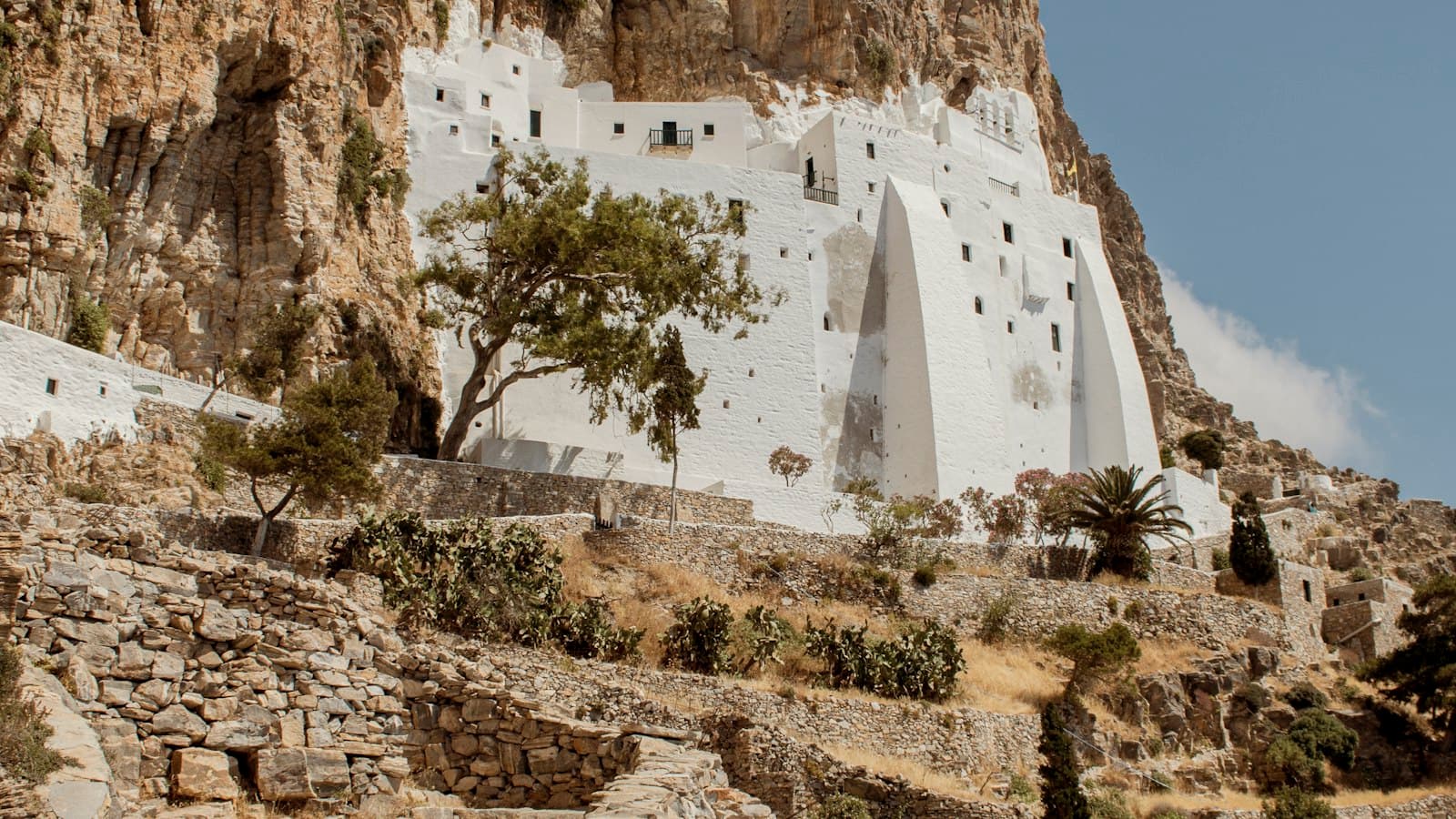
From Chora a path leads down to the monastery of Hozoviotissa, built into a sheer cliff above the sea in the eleventh century. Visitors are welcome in the morning; dress modestly and bring water. Stronger walkers can follow the old route north along the spine of the island towards Aegiali, with the sea on both sides. Allow most of a day and arrange a ride back.
Sifnos: Kastro, the Seven Martyrs and the south coast
Sifnos has one of the best-kept path networks in the islands, with numbered routes between villages and monasteries. A short favourite is the walk from Kastro down to the chapel of the Seven Martyrs on its rock. A longer one runs from Apollonia through terraced fields to Chrysopigi, where the monastery sits on a split rock by the sea. Swim at the end.
Tinos: villages and dovecotes
Inland Tinos is a maze of villages joined by paths between dry-stone walls. A loop through the valley below Tarampados passes dozens of decorated dovecotes, and another links Volax, with its granite boulders, to its neighbouring villages. Spring brings wildflowers and running streams.
Doing it well
Start early: by eleven in summer the sun is fierce. Wear proper shoes, because paths are uneven and polished stones can be slippery. Carry more water than you think you need, and a hat. Close farm gates behind you and greet the people you meet; many paths cross private land and stay open through goodwill.
When to go
April to June and late September to October are the best months for walking. Many hosts in our collection walk these paths themselves and are glad to suggest a route by message.